
Effective bedroom packing tips transform one of the most personal spaces in your home from a chaotic packing nightmare into an organized, efficient process. Your bedroom contains everything from delicate jewelry and folded clothing to bulky furniture and awkward mattresses — each requiring different packing techniques, materials, and handling approaches. Whether you are relocating within Ottawa, moving across Ontario, or managing a long-distance move across Canada, mastering bedroom packing tips ensures your clothing arrives wrinkle-free, your furniture transfers undamaged, and your personal items remain secure throughout the journey. This guide walks you through every dimension of bedroom packing — from vacuum-sealing clothes and dismantling bed frames to protecting mattresses and organizing closet contents for efficient unpacking.
These bedroom packing tips cover material selection, timeline planning, furniture disassembly, clothing organization strategies, and specialty item protection. By the time you finish reading, you will have a clear action plan for tackling your bedroom systematically and stress-free.
For the complete moving preparation framework beyond just bedroom packing, the complete moving guide covers every phase of your relocation from planning through settling in. For detailed packing strategies across your entire home, explore the complete packing guide for moving. And for comprehensive material sourcing and packing principles, the how to pack for moving resource provides essential context.
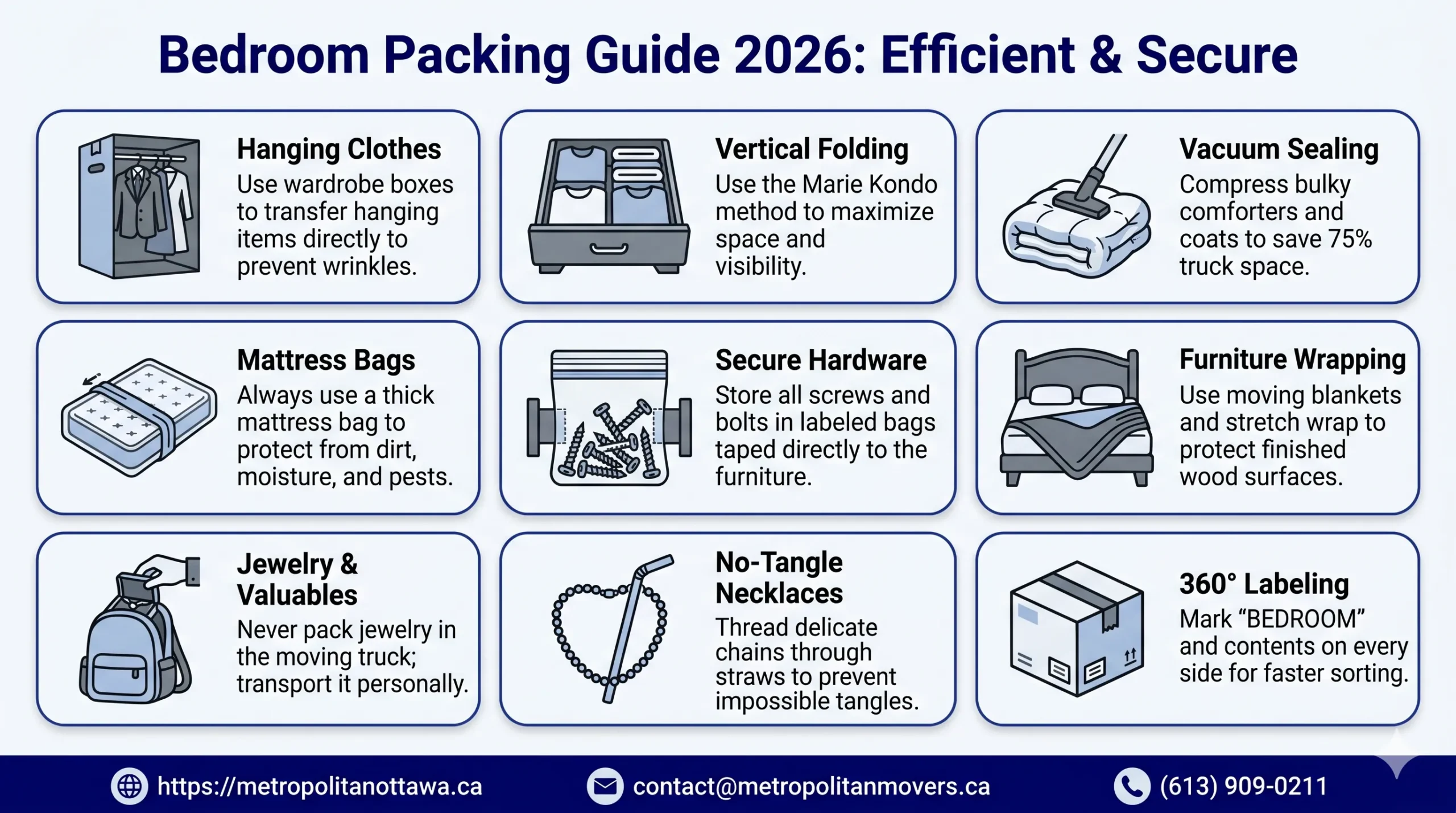
Why Bedroom Packing Tips Matter More Than You Think
Bedrooms demand strategic bedroom packing tips because they combine high-value personal items, bulky furniture pieces, and large volumes of clothing that quickly overwhelm packers who approach the room randomly. Unlike kitchens where fragility drives packing strategy, bedrooms require organization, space efficiency, and protection for items ranging from delicate jewelry to king-size mattresses.
Most households underestimate bedroom packing time. A master bedroom with walk-in closets, dressers, nightstands, and a platform bed can take 6–8 hours to pack properly when furniture disassembly, clothing sorting, and specialty item protection are factored in. Attempting to pack the night before moving day creates chaos — clothes get stuffed into garbage bags, jewelry disappears into unmarked boxes, and furniture arrives at the new home with scratches and missing hardware.
Metropolitan Movers Ottawa has witnessed every bedroom packing mistake imaginable: mattresses loaded without protective covers, bed frames disassembled with screws lost in the process, and entire closets dumped into boxes without any organizational system. Following proven bedroom packing tips prevents these outcomes and ensures your most personal space transitions smoothly to your new home.
Bedroom Packing Timeline: When to Start and What to Pack First
Strategic bedroom packing tips begin with a timeline that phases tasks across multiple days rather than cramming everything into a single exhausting session.
2 Weeks Before Moving Day: Declutter and Donate
Start your bedroom packing tips timeline by purging clothing you no longer wear, bedding you no longer use, and decorative items that no longer fit your style. Reducing bedroom inventory by 20–30 percent before packing saves boxes, moving truck space, and unpacking time. Donate gently used clothing to local charities and discard worn-out items responsibly.
1 Week Before Moving: Pack Off-Season and Specialty Items
Begin packing off-season clothing (winter coats in summer, summer dresses in winter), specialty occasion wear (formal dresses, suits), extra bedding sets, decorative pillows, and wall art. These items are not needed before moving day and can be packed early without disrupting daily routines.
3–5 Days Before Moving: Pack Primary Clothing and Furniture Preparation
Pack the majority of your clothing, leaving only essentials for your final days. Begin dismantling non-essential furniture pieces like bookshelves, desks, and extra dressers. Organize hardware in labeled ziplock bags taped to furniture pieces.
1 Day Before Moving: Pack Remaining Clothing and Dismantle Bed Frame
Pack your final clothing items, leaving only one outfit for moving day and one for your first day in the new home. Dismantle your bed frame and headboard, protecting components with moving blankets.
Moving Day Morning: Pack Final Essentials
The last items packed are your pillow, a change of clothes, toiletries, and any jewelry or valuables you are transporting personally rather than loading on the moving truck.
The packing checklist for moving provides a room-by-room timeline for your entire home, and the moving day guide covers final-day logistics and coordination.
Packing Clothes for Moving: Efficient Techniques That Save Space and Prevent Wrinkles
Packing clothes for moving efficiently requires different strategies for different garment types. These bedroom packing tips for clothing maximize space while minimizing wrinkles.
Wardrobe Boxes for Hanging Clothes
Wardrobe boxes — tall boxes with built-in hanging bars — allow you to transfer hanging clothes directly from closet to box without folding. This method works best for suits, dresses, dress shirts, and anything prone to wrinkling. Simply lift hangers from your closet rod and hang them in the wardrobe box. Each box holds approximately 2 feet of closet rod space.
Folding and Stacking for Casual Clothing
T-shirts, jeans, sweaters, and casual wear can be folded and stacked in medium-sized boxes or large suitcases. Use the Marie Kondo vertical folding method — fold items into compact rectangles and stand them upright in boxes rather than stacking horizontally. This method prevents wrinkles and allows you to see every item when unpacking.
Vacuum-Sealing Clothes for Maximum Space Efficiency
Vacuum-sealing clothes compresses bulky items like winter coats, comforters, and sweaters into flat, space-saving bags. Use vacuum-seal bags with one-way valves and a standard household vacuum to remove air. This technique reduces volume by 50–75 percent and protects clothing from moisture during transit.
Avoid vacuum-sealing delicate fabrics (silk, lace, beaded garments) or items you will need immediately upon arrival. Vacuum-sealed bags work best for long-term storage items and off-season clothing.
Suitcases and Duffel Bags
Use your existing luggage to pack clothing rather than leaving suitcases empty on the moving truck. Suitcases protect clothing better than cardboard boxes, roll easily, and count as items you are already transporting anyway. Pack heavier items like shoes and jeans at the bottom, lighter items like shirts and undergarments on top.
For comprehensive clothing packing across all seasons and garment types, the complete packing guide for moving covers wardrobe organization strategies in detail.
Bedroom Packing Tips: Furniture, Mattresses & Specialty Items by Category
| Bedroom Item Category | Packing Method | Materials Needed | Special Notes |
|---|---|---|---|
| Hanging Clothes | Transfer directly into wardrobe boxes on hangers | Wardrobe boxes with hanging bars | Best for suits, dresses, dress shirts — prevents wrinkles |
| Folded Clothes | Fold vertically, stack in medium boxes or suitcases | Medium boxes, suitcases, packing paper | Use vertical folding method to prevent wrinkles and maximize visibility |
| Bulky Items (Coats, Comforters) | Vacuum-seal in compression bags | Vacuum-seal bags, household vacuum | Reduces volume by 50–75%; avoid for delicate fabrics |
| Mattress | Wrap in mattress bag, stand on edge during transport | Mattress bag (queen/king size), packing tape | Protects from dirt, moisture, and bed bugs during move |
| Bed Frame & Headboard | Dismantle completely, wrap components in moving blankets | Screwdriver, Allen keys, ziplock bags, moving blankets, tape | Store hardware in labeled ziplock bags taped to frame |
| Dresser & Nightstands | Remove drawers, wrap separately; wrap furniture body with blankets | Moving blankets, stretch wrap, tape | Empty all drawers first; secure loose hardware before wrapping |
| Jewelry & Valuables | Use original jewelry boxes or small padded containers; transport personally | Jewelry boxes, small padded bags, bubble wrap | Never pack jewelry in moving truck — keep with you during move |
| Shoes | Pack in original boxes or stuff with packing paper, stack in medium boxes | Shoe boxes, packing paper, medium boxes | Keep pairs together; use socks or packing paper to maintain shape |
| Bedroom packing tips by category — methods and materials for efficient, damage-free packing. Always prioritize organization and labeling for smooth unpacking. | |||
Packing Mattress Guide: Protecting Your Mattress During the Move
A proper packing mattress guide is essential because mattresses are vulnerable to dirt, moisture, and bed bugs during transit. Following these bedroom packing tips for mattresses ensures yours arrives clean and undamaged.
Step 1: Purchase a Mattress Bag
Mattress bags are heavy-duty plastic covers designed specifically for moving. Purchase the correct size for your mattress (twin, full, queen, king) and ensure the bag is thick enough to resist tearing. Most hardware stores and moving supply retailers carry mattress bags.
Step 2: Remove All Bedding
Strip your mattress completely — sheets, mattress protector, mattress pad — and wash these items before packing separately. A bare mattress slides into the bag more easily and prevents trapping moisture inside.
Step 3: Slide Mattress Into Bag
With a helper, slide the mattress into the bag horizontally. Seal the open end with heavy-duty packing tape, ensuring no gaps remain. The bag protects against dirt, moisture, and potential bed bug exposure during transit and storage.
Step 4: Transport on Edge
Mattresses should be transported standing on edge rather than lying flat. This positioning prevents bending and sagging damage. Secure the mattress against the truck wall using straps to prevent shifting.
For households managing full-home packing, the packing and unpacking service from Metropolitan Movers Ottawa provides professional handling of mattresses, furniture, and all bedroom items.
Dismantling Bed Frame: Step-by-Step Disassembly Instructions
Dismantling a bed frame correctly prevents lost hardware, damaged components, and reassembly frustration at your new home. These bedroom packing tips for bed frame disassembly work for platform beds, metal frames, and wooden frames alike.
Step 1: Strip the Bed and Remove the Mattress
Remove all bedding, pillows, and the mattress. Clear the area around the bed to give yourself working space.
Step 2: Photograph the Frame Before Disassembly
Take photos of the assembled bed frame from multiple angles. These photos serve as reassembly references and help you remember which components connect where.
Step 3: Locate and Remove All Hardware
Use the appropriate tools (screwdriver, Allen key, wrench) to remove bolts, screws, and connecting hardware. As you remove each piece of hardware, place it immediately into a labeled ziplock bag. Write the bed frame location (e.g., “Master Bedroom Bed Frame”) on the bag with a permanent marker.
Step 4: Disassemble in Reverse Order of Assembly
Most bed frames disassemble in reverse order of how they were assembled. Start with the headboard and footboard connections, then remove side rails, and finally separate any remaining components. Keep all parts from a single frame together.
Step 5: Protect Components With Moving Blankets
Wrap the headboard, footboard, side rails, and any decorative components in moving blankets or furniture pads. Secure the blankets with stretch wrap or packing tape (avoid taping directly to finished wood surfaces). Label each wrapped component clearly.
Step 6: Tape Hardware Bag to Frame
Tape the ziplock bag containing all hardware directly to one of the wrapped bed frame components. This prevents the hardware from being separated from the frame during the move.
For specialty bedroom furniture including ornate bed frames, the furniture moving services team handles disassembly, protection, and reassembly as part of comprehensive moving support.
Closet Packing Hacks: Organizing Your Wardrobe for Efficient Moving
Closet packing hacks within your bedroom packing tips strategy maximize efficiency and create organized systems that make unpacking dramatically easier.
Color-Code Clothing by Season or Type
Before packing, organize hanging clothes by season (winter, summer, transitional) or by type (work clothes, casual, formal). This organization carries forward into your new closet and speeds up unpacking.
Use Trash Bags for Quick Hanging Clothes Transfer
For clothing you are willing to fold temporarily, use large trash bags. Leave clothes on hangers, pull a trash bag up from the bottom, gather the bag around the hangers, and tie the bag at the top. This method protects clothes while keeping them on hangers for quick transfer.
Pack Shoes in Original Boxes
Shoe boxes stack efficiently, protect shoes during transit, and keep pairs together. If you no longer have original boxes, wrap each pair in packing paper and pack in medium boxes with tissue paper or socks stuffed inside to maintain shape.
Drawer Contents Stay In Place
For small, lightweight items in dresser drawers (socks, undergarments, accessories), you can leave them in the drawers and secure the drawers with stretch wrap. This works only if the dresser is being transported a short distance and if drawer contents are light. For long-distance moves or heavy drawer contents, remove and pack separately.
The complete packing guide for moving covers closet organization and clothing packing strategies across all rooms.
Jewelry Packing Safety: Protecting Valuables During Your Move
Jewelry packing safety is a critical subset of bedroom packing tips because jewelry is high-value, easily lost, and vulnerable to theft. Never pack jewelry in boxes loaded on the moving truck.
Transport Jewelry Personally
Keep all jewelry, watches, and valuables with you during the move. Pack jewelry in a small bag or container that travels in your personal vehicle or carry-on luggage if flying to your new destination.
Use Original Jewelry Boxes
Original jewelry boxes provide the best protection. If you no longer have them, wrap each piece individually in soft cloth or tissue paper, place in small padded containers or ziplock bags, and pack all jewelry together in a single secure bag.
Photograph Valuable Pieces
Before packing, photograph all high-value jewelry pieces for insurance documentation. Store these photos digitally in a cloud service so they remain accessible if needed for insurance claims.
Untangle Necklaces Before Packing
Thread delicate necklaces through drinking straws and clasp them closed. This prevents tangling during transit. Alternatively, lay necklaces flat on packing paper, secure with tape, and roll gently.
For households with extensive jewelry collections or antique pieces, professional packing services provide specialized handling. The packing and unpacking service includes high-value item protection protocols.
Folding Bedding for Moving: Linens, Comforters, and Pillows
Folding bedding efficiently as part of your bedroom packing tips saves space and keeps linens clean during transit.
Sheets and Pillowcases
Fold sheets neatly and store inside matching pillowcases. This keeps sets together and creates compact bundles. Stack folded sheet sets in medium boxes or large suitcases.
Comforters and Duvets
Bulky comforters benefit from vacuum-sealing or compression bags. If vacuum-sealing is not available, fold comforters as compactly as possible and use them as padding around furniture or fragile items in the moving truck.
Pillows
Pillows can be vacuum-sealed to reduce volume, placed in large garbage bags for cleanliness, or used as cushioning material between fragile items. Avoid packing pillows in boxes unless necessary — they take up valuable box space better used for heavier items.
Blankets and Throws
Use blankets as wrapping material for furniture, mirrors, and fragile items during the move. This dual-purpose approach saves packing materials and ensures your blankets serve a functional role during transit.
Moving Bedroom Furniture: Dressers, Nightstands, and Bookshelves
Moving bedroom furniture safely requires preparation beyond just lifting and loading. These bedroom packing tips for furniture prevent damage and simplify reassembly.
Empty All Drawers and Shelves
Remove all contents from dressers, nightstands, and bookshelves before moving. Even lightweight items add significant weight and can shift during transit, causing drawers to slide open or shelves to collapse.
Remove Drawers From Dressers
Take all drawers out of dressers and wrap them individually with stretch wrap or moving blankets. This reduces the weight of the dresser body and prevents drawers from sliding open during transport.
Protect Finished Surfaces
Wrap all furniture in moving blankets or furniture pads, securing with stretch wrap. Avoid taping directly to wood surfaces, as tape adhesive can damage finishes.
Secure Loose Components
If furniture has removable legs, finials, or decorative elements, remove them, wrap separately, and tape the wrapped pieces to the main furniture body with labels indicating where they belong.
For full-service furniture handling including disassembly, protection, and reassembly, Metropolitan Movers Ottawa provides residential moving in Ottawa services that cover every furniture type across all rooms.
Bedroom Moving Checklist: Your Complete Packing and Preparation Guide
This bedroom moving checklist integrates all bedroom packing tips into a single actionable timeline.
2 Weeks Before Moving:
- Declutter clothing, bedding, and bedroom items
- Donate or discard items you no longer use
- Order packing supplies (wardrobe boxes, mattress bags, moving blankets)
1 Week Before Moving:
- Pack off-season clothing and specialty items
- Pack extra bedding sets, decorative pillows, wall art
- Begin sorting jewelry and valuables for personal transport
3–5 Days Before Moving:
- Pack majority of clothing using wardrobe boxes, folding, or vacuum-sealing
- Dismantle non-essential furniture (bookshelves, desks)
- Organize hardware in labeled ziplock bags
1 Day Before Moving:
- Pack remaining clothing except moving day outfit
- Dismantle bed frame and wrap components
- Pack mattress in protective bag
Moving Day Morning:
- Pack final essentials (pillow, change of clothes, toiletries)
- Transport jewelry and valuables personally
- Conduct final bedroom walkthrough for forgotten items
The settling after moving guide covers what happens after the truck unloads, and the first week after moving to Ottawa resource helps newcomers establish routines in the capital region.
When Professional Packing Makes Sense for Your Bedroom
For households with large walk-in closets, extensive wardrobes, or limited packing time, professional packing services eliminate stress and ensure proper furniture disassembly. Metropolitan Movers Ottawa provides full-service bedroom packing using wardrobe boxes, professional-grade materials, and efficient techniques that complete in hours what would take days for DIY packers.
Professional packing also includes liability coverage — if items are damaged due to packer error, they are covered. DIY packing places full responsibility on the homeowner.
For families managing entire household relocations, the house moving service covers full-home logistics from packing through final placement. For those relocating to Ottawa from other Canadian cities, Metropolitan Movers Ottawa manages long-distance bedroom relocations as part of comprehensive cross-province moves. Relevant routes include moving from Toronto to Ottawa, Toronto to Montreal, and Toronto to Vancouver.
The how to unpack after moving guide covers efficient unpacking sequencing once you arrive at your new home.
FAQs: Bedroom Packing Tips
When should I start packing my bedroom?
Start bedroom packing 2 weeks before moving day by decluttering and packing off-season items. Pack the majority of your bedroom 3–5 days before moving, leaving only essentials for your final days. Dismantle your bed frame and pack final clothing items 1 day before moving. This phased timeline prevents disruption to your daily routine while ensuring everything is packed systematically.
What is the best way to pack clothes for moving?
The best method depends on garment type. Use wardrobe boxes for hanging clothes that wrinkle easily (suits, dresses, dress shirts). Fold and stack casual clothing vertically in medium boxes or suitcases. Vacuum-seal bulky items like winter coats and comforters to save space. Use your existing luggage to pack clothing rather than leaving suitcases empty. The complete packing guide for moving covers clothing strategies in detail.
Should I vacuum-seal all my clothes? No. Vacuum-sealing works best for off-season clothing, bulky items like coats and comforters, and items you will not need immediately upon arrival. Avoid vacuum-sealing delicate fabrics (silk, lace, beaded garments) or items you need right away. Compression can create wrinkles that require ironing, so use vacuum-sealing selectively for maximum benefit.
How do I protect my mattress during a move?
Purchase a heavy-duty mattress bag in the correct size (twin, full, queen, king), strip your mattress completely, slide it into the bag horizontally with a helper, and seal the open end with packing tape. Transport the mattress standing on edge rather than lying flat to prevent bending damage. Mattress bags protect against dirt, moisture, and bed bugs during transit.
What should I do with jewelry and valuables?
Never pack jewelry in boxes loaded on the moving truck. Transport all jewelry, watches, and valuables personally in your vehicle or carry-on luggage. Use original jewelry boxes or wrap each piece individually in soft cloth. Photograph valuable pieces for insurance documentation before packing. The complete moving guide covers valuables handling protocols.
How do I dismantle a bed frame without losing hardware?
Photograph the assembled bed frame before starting. As you remove bolts and screws, place them immediately into a labeled ziplock bag. Write the furniture location on the bag with a permanent marker. Disassemble in reverse order of assembly, starting with headboard/footboard connections. Wrap all components in moving blankets and tape the hardware bag directly to a wrapped component.
Can I leave clothes in dresser drawers during the move?
Only for short-distance moves and only if drawer contents are lightweight (socks, undergarments, accessories). Secure drawers with stretch wrap to prevent opening during transit. For long-distance moves or heavy drawer contents, empty all drawers and pack items separately. Never leave heavy items in drawers — the added weight can damage the dresser and injure movers.
Does Metropolitan Movers Ottawa provide bedroom packing services?
Yes. Metropolitan Movers Ottawa offers both full-service packing for entire homes and room-specific packing services for households that want professional handling of bedrooms while managing other rooms themselves. Professional bedroom packing includes wardrobe boxes, furniture disassembly, mattress protection, and complete organization. The packing and unpacking service page provides full service details.
Bedroom Packing Tips: From Chaos to Calm on Moving Day
These bedroom packing tips transform the most personal room in your home from an overwhelming packing challenge into a systematic, manageable process. By following the timeline structure, clothing organization strategies, furniture disassembly protocols, and specialty item protection outlined here, you ensure your clothing arrives wrinkle-free, your furniture transfers undamaged, and your personal items remain secure throughout the journey.
For the complete moving preparation framework beyond just bedroom packing, the complete moving guide covers every phase of your relocation from initial planning through settling in. The packing checklist for moving ensures every room is addressed systematically, and the how to pack a moving container resource covers loading strategy for both moving trucks and storage units.
When moving day arrives, Metropolitan Movers Ottawa handles every operational detail — whether you packed yourself using these bedroom packing tips or hired professional support. The local moving service covers Ottawa-area relocations, while the long-distance movers team manages cross-province and cross-country moves. Explore the full services page or contact the team to begin planning your move.