Effective living room packing requires more planning and specialized materials than any other common space in your home. The living room concentrates your largest furniture pieces, most expensive electronics, fragile wall art, bulky area rugs, and delicate decorative items all in one room — each category demanding different protection techniques and packing strategies. Whether you are relocating within Ottawa, moving across Ontario, or managing a long-distance move across Canada, mastering living room packing ensures your flat-screen TV arrives uncracked, your sofa transfers without tears, and your mirrors survive transit without shattering. This guide walks you through every dimension of living room packing — from bubble-wrapping mirrors and protecting electronics to disassembling furniture and organizing decor for efficient unpacking.
This living room packing guide covers material selection, furniture protection protocols, electronics handling, wall art wrapping techniques, and timeline planning. By the time you finish reading, you will have a clear action plan for tackling the most visible and valuable room in your home.
For the complete moving preparation framework beyond just living room packing, the complete moving guide covers every phase of your relocation from planning through settling in. For detailed packing strategies across your entire home, explore the complete packing guide for moving. And for material sourcing and general packing principles, the packing supplies you need resource provides essential context.
Why Living Room Packing Demands the Most Careful Planning
Living room packing stands apart from other rooms because it combines the heaviest furniture pieces (sofas, entertainment centers, bookcases) with the most expensive and fragile electronics (televisions, sound systems, gaming consoles) and the most visually valuable decorative items (wall art, mirrors, sculptures). A single packing mistake — an unwrapped TV, an improperly protected sofa, or a mirror loaded without adequate cushioning — can result in hundreds or thousands of dollars in replacement costs.
Most households underestimate living room packing time. A standard living room with a sectional sofa, large TV, entertainment center, coffee table, end tables, wall art, area rug, and decorative items can take 4–6 hours to pack properly when furniture protection, electronics disassembly, and fragile item wrapping are factored in. Attempting to rush through living room packing the night before moving day creates chaos — TVs get loaded without boxes, sofas arrive stained or torn, and mirrors shatter in transit.
Metropolitan Movers Ottawa has witnessed every living room packing disaster imaginable: flat-screen TVs cracked from improper transport positioning, leather sofas scratched from inadequate wrapping, and framed art destroyed from box overloading. Following proven living room packing strategies prevents these outcomes and ensures your most visible space transitions smoothly to your new home.
Living Room Packing Timeline: When to Start and What to Pack First
Strategic living room packing begins with a phased timeline that spreads tasks across multiple days rather than cramming everything into a single exhausting session.
2 Weeks Before Moving Day: Declutter and Measure
Start your living room packing timeline by decluttering decorative items you no longer display, books you no longer read, and furniture pieces that will not fit in your new home. Measure large furniture and doorways at your new address to confirm everything will fit through entry points. Donate or sell items you will not be moving.
1 Week Before Moving: Pack Decorative Items and Wall Art
Begin packing decorative items, picture frames, wall art, sculptures, and seasonal decor. These items are not needed for daily living and can be packed early without disrupting your routine. This phase also allows you to practice wrapping techniques on lower-value items before tackling expensive electronics.
3–5 Days Before Moving: Pack Electronics and Small Furniture
Pack your television, sound system, gaming consoles, and small electronics using original boxes if available. Dismantle small furniture pieces like side tables, coffee tables, and bookshelves. Organize hardware in labeled ziplock bags.
1 Day Before Moving: Protect Large Furniture and Final Items
Wrap your sofa, sectional, armchairs, and entertainment center in moving blankets. Pack remaining living room items except essentials you will use until moving day morning (TV remote, phone charger, one throw blanket).
Moving Day Morning: Final Walkthrough
Conduct a final living room sweep for items left in cabinets, behind furniture, or forgotten in corners.
The packing checklist for moving provides a room-by-room timeline for your entire home, and the moving day guide covers final-day logistics and coordination.
Packing TV for Moving: Protecting Flat-Screen Televisions
Packing a TV for moving demands extreme care because modern flat-screen TVs are fragile, expensive, and irreplaceable. These living room packing techniques for televisions prevent the most common damage — cracked screens from pressure or impact.
Use the Original TV Box If Available
The original manufacturer’s box and styrofoam inserts provide the best protection. If you saved your TV box, use it. If not, purchase a TV moving box from a moving supply retailer — these boxes are designed specifically for flat-screen transport.
Prepare the TV for Packing
Disconnect all cables and accessories. Wrap the power cord and any detachable stands in bubble wrap and pack separately. Clean the screen gently with a microfiber cloth to remove dust and fingerprints before wrapping.
Wrap the Screen
Place a soft blanket or foam sheet directly on the screen surface, then wrap the entire TV in bubble wrap with bubbles facing away from the screen. Secure with packing tape, taping the bubble wrap to itself rather than directly to the TV.
Load Vertically in the Truck
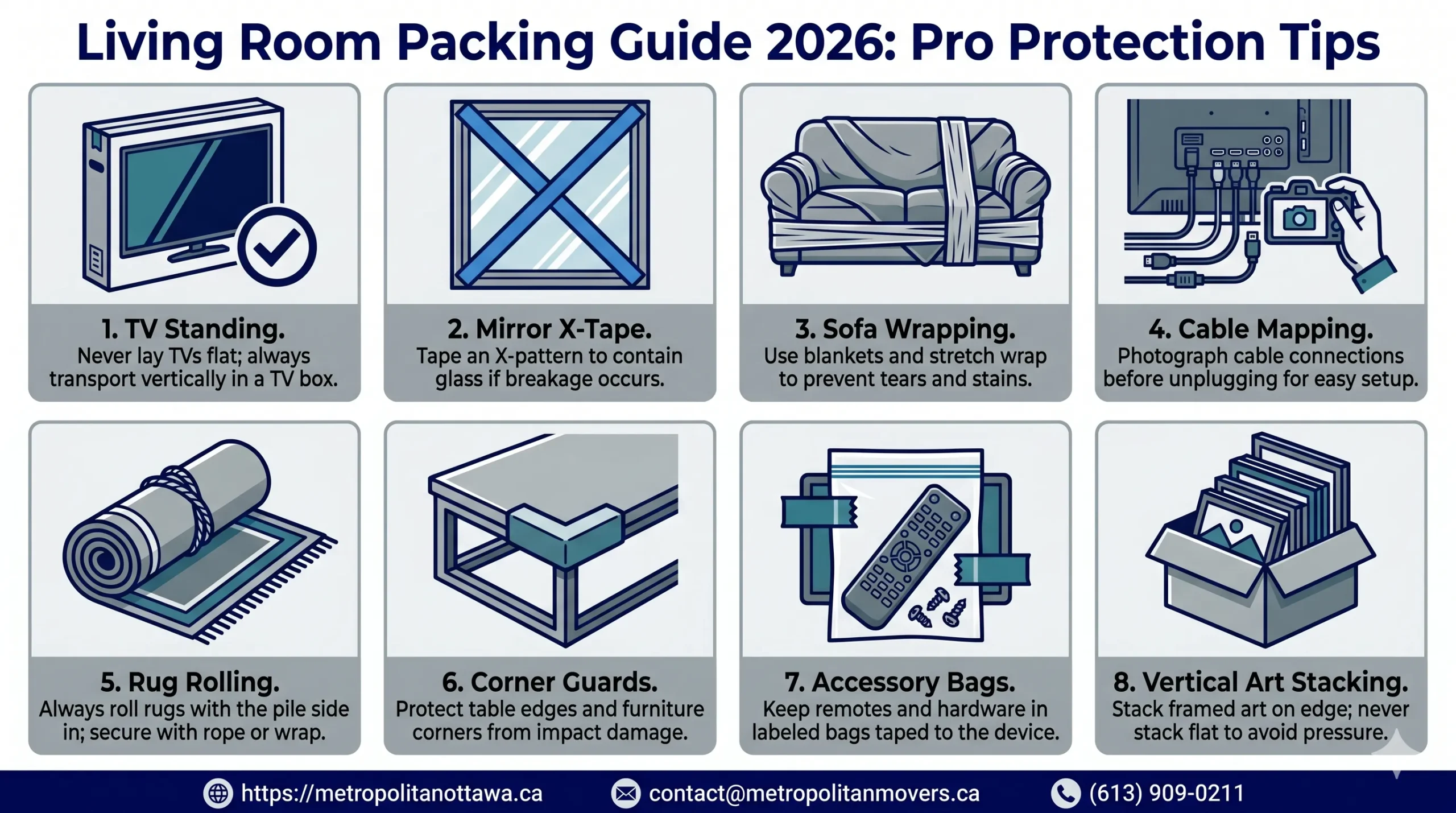
Televisions must be transported standing upright (vertical position) rather than lying flat. Laying a flat-screen TV horizontally puts pressure on the screen and can cause cracking. Secure the TV against the truck wall with straps to prevent tipping.
For comprehensive electronics protection beyond just TVs, the how to pack fragile items guide covers sound systems, computers, and delicate technology across your entire home.
Living Room Packing: Furniture, Electronics & Decor by Category
| Living Room Item Category | Packing Method | Materials Needed | Special Notes |
|---|---|---|---|
| Flat-Screen TV | Use original box or TV moving box; wrap screen, transport vertically | TV box, bubble wrap, blanket, packing tape | Never lay flat — must stand upright during transport to prevent screen cracking |
| Sofa & Sectional | Wrap in moving blankets, secure with stretch wrap; protect arms and corners | Moving blankets, stretch wrap, furniture pads | Use sofa covers for fabric protection; remove legs if possible to reduce height |
| Mirrors & Glass Art | Tape X-pattern on glass, wrap in bubble wrap, use mirror boxes | Painter’s tape, bubble wrap, mirror boxes, packing paper | X-pattern prevents shattering; transport vertically against truck wall |
| Wall Art & Framed Pictures | Wrap individually, stack vertically in picture boxes with cardboard dividers | Bubble wrap, picture boxes, cardboard dividers, tape | Never stack horizontally — vertical stacking prevents frame pressure damage |
| Electronics (Sound Systems, Consoles) | Use original boxes; if unavailable, wrap in bubble wrap and pack in small boxes | Original boxes, bubble wrap, small boxes, ziplock bags for cables | Label all cables before disconnecting; photograph cable connections for setup reference |
| Coffee Table & End Tables | Remove glass tops, wrap separately; protect legs and corners with blankets | Bubble wrap (for glass), moving blankets, stretch wrap, tape | Dismantle if possible to reduce size; store hardware in labeled bags |
| Area Rugs | Roll tightly, secure with rope or stretch wrap, label with size and room | Rope or stretch wrap, labels | Never fold rugs — rolling prevents permanent creasing; clean before rolling |
| Decorative Items (Vases, Sculptures) | Wrap individually in bubble wrap, pack in small boxes with heavy cushioning | Bubble wrap, packing paper, small boxes, tape | Mark boxes “FRAGILE” on all sides; avoid overloading boxes with heavy items |
| Living room packing guide by category — methods and materials for damage-free packing. Always prioritize proper wrapping and cushioning for fragile items. | |||
Protecting Sofas During Moving: Fabric, Leather, and Sectional Care
Protecting sofas during moving requires different techniques depending on upholstery type. These living room packing strategies for sofas prevent stains, tears, and structural damage.
Fabric Sofas
Clean fabric sofas before moving to prevent dirt from grinding into fibers during transport. Wrap the entire sofa in moving blankets, securing the blankets with stretch wrap. Pay extra attention to arms and corners where fabric is most vulnerable to tears.
For added protection, use plastic sofa covers underneath moving blankets. These covers protect against moisture, dirt, and potential stains if the sofa is stored temporarily.
Leather Sofas
Leather requires gentler handling than fabric. Never wrap leather directly in plastic — trapped moisture can cause mold and mildew. Instead, wrap leather sofas in breathable furniture pads or moving blankets, securing with stretch wrap applied loosely to avoid compression marks.
Sectional Sofas
Disassemble sectional pieces if the connection hardware allows. Transport each section separately and reassemble at your new home. If disassembly is not possible, wrap the entire assembled sectional and protect all exposed edges and corners.
Remove Legs When Possible
Many sofas have screw-in legs that can be removed to reduce height and make doorway navigation easier. Remove legs, wrap them in bubble wrap, and tape them to the underside of the sofa or store in a labeled ziplock bag.
For full-service furniture handling including sofa protection and reassembly, Metropolitan Movers Ottawa provides residential moving in Ottawa services that cover every furniture type across all rooms.
Bubble-Wrapping Mirrors: Preventing the Most Costly Living Room Packing Mistake
Bubble-wrapping mirrors correctly prevents one of the most common and costly living room packing failures — shattered glass from inadequate protection or improper loading.
Step 1: Apply Painter’s Tape in an X-Pattern
Before wrapping, apply painter’s tape (never duct tape) across the mirror surface in a large X-pattern from corner to corner. This tape does not prevent breakage, but it contains glass shards if the mirror does shatter, preventing widespread glass spread in the moving truck.
Step 2: Wrap in Bubble Wrap
Wrap the entire mirror in multiple layers of bubble wrap with bubbles facing away from the glass surface. Secure the bubble wrap with packing tape, taping the wrap to itself rather than directly to the mirror frame.
Step 3: Use Mirror Boxes or Create Cardboard Sandwich
Mirror boxes — tall, flat boxes designed for mirrors and large pictures — provide the best protection. If mirror boxes are unavailable, create a cardboard sandwich by placing flattened cardboard sheets on both sides of the wrapped mirror and taping the edges.
Step 4: Label and Transport Vertically
Label all sides “FRAGILE — MIRROR” and mark “THIS SIDE UP” with arrows. Mirrors must be transported standing vertically (on edge) against the truck wall, secured with straps to prevent tipping. Never lay mirrors flat on the truck floor where weight can press on the glass.
The how to pack fragile items guide covers additional mirror protection techniques and addresses other fragile living room items.
Packing Wall Art and Framed Pictures
Packing wall art safely within your living room packing strategy requires attention to frame type, glass protection, and box selection.
Remove Art From Walls Carefully
Remove nails or picture hangers from walls and dispose of them safely. For valuable art, photograph each piece before packing for insurance documentation.
Protect Glass-Front Frames
For framed art with glass fronts, apply painter’s tape in an X-pattern across the glass just as you would for mirrors. This prevents shattering during transit.
Wrap Each Piece Individually
Wrap each framed piece in bubble wrap or packing paper. For valuable or irreplaceable art, use both — packing paper directly on the glass to prevent bubble wrap texture impressions, then bubble wrap for cushioning.
Use Picture Boxes or Create Custom Boxes
Picture boxes are adjustable-width boxes designed specifically for framed art. Stack wrapped frames vertically (on edge) inside picture boxes, using cardboard dividers between each piece. Never stack frames horizontally flat — the weight of top frames damages lower ones.
Label by Room and Wall Location
Label boxes not just “LIVING ROOM ART” but “LIVING ROOM — ABOVE SOFA” or “LIVING ROOM — EAST WALL.” This detail speeds up unpacking and helps you visualize your new layout.
For comprehensive art packing across all rooms, the complete packing guide for moving covers valuable and delicate items in detail.
Packing Electronics: Sound Systems, Gaming Consoles, and Cables
Packing electronics as part of your living room packing strategy requires organization, protective materials, and careful labeling to ensure everything works upon arrival.
Use Original Boxes When Available
Original manufacturer boxes provide the best protection for electronics. If you saved boxes for your sound system, Blu-ray player, gaming consoles, or speakers, use them.
Photograph Cable Connections Before Disconnecting
Before unplugging any cables, photograph the back of your TV, sound system, and gaming console showing exactly where each cable connects. These photos serve as setup guides at your new home and prevent connection confusion.
Label All Cables
As you disconnect each cable, attach a piece of tape to both ends and write what the cable connects (e.g., “HDMI — TV to Sound Bar” or “Power — Gaming Console”). Store all cables for a single device together in a labeled ziplock bag.
Wrap and Cushion
If original boxes are unavailable, wrap each electronic component in bubble wrap and pack in appropriately sized boxes with heavy cushioning on all sides. Never allow electronics to touch each other or box walls directly.
Pack Remote Controls With Devices
Tape remote controls to the outside of wrapped electronics or pack them in the same box with clear labeling. Losing a TV remote in a move is frustrating and expensive to replace.
The packing supplies you need guide covers specialized materials for electronics protection.
Moving Large Furniture: Entertainment Centers, Bookcases, and Coffee Tables
Moving large furniture from your living room safely requires disassembly, protection, and strategic planning. These living room packing techniques for large pieces prevent damage and simplify navigation through doorways.
Disassemble What You Can
Entertainment centers, bookcases, and modular shelving units often disassemble into smaller components. Remove shelves, detach backing panels, and separate side panels when construction allows. This reduces size, weight, and damage risk.
Organize All Hardware
As you remove screws, bolts, and connecting hardware, place them immediately into labeled ziplock bags. Write the furniture name and location on each bag (“Living Room Entertainment Center — Top Shelf Brackets”). Tape hardware bags to the corresponding furniture piece.
Empty All Cabinets and Shelves
Remove all items from entertainment centers, bookcases, and coffee table drawers before moving. Even lightweight items add significant weight and can shift during transit, causing structural damage.
Protect Finished Surfaces
Wrap all furniture in moving blankets or furniture pads, securing with stretch wrap. Pay extra attention to corners, edges, and any decorative elements that protrude. Never apply tape directly to finished wood surfaces.
Remove Glass Components
Coffee tables and entertainment centers often feature glass shelves or tops. Remove all glass components, wrap them separately in bubble wrap, and pack them in boxes with “FRAGILE — GLASS” labels. Never leave glass in furniture during transport.
For full-service furniture disassembly, protection, and reassembly, the furniture moving services team handles every component.
Area Rug Packing: Rolling, Protecting, and Labeling Large Rugs
Area rug packing is a simple but often-overlooked element of living room packing. Proper rolling prevents permanent creasing and protects rugs from dirt and moisture during transit.
Clean Rugs Before Packing
Vacuum or professionally clean area rugs before rolling. Dirt trapped in fibers during transport can grind into the rug and cause permanent damage.
Roll, Don’t Fold
Always roll area rugs tightly rather than folding. Folding creates permanent creases that are difficult or impossible to remove. Roll rugs with the pile side facing inward to protect the surface texture.
Secure With Rope or Stretch Wrap
Once rolled, secure the rug with rope, twine, or stretch wrap to prevent unrolling during transit. Tie in at least three places along the length — both ends and the middle.
Label With Size and Destination Room
Attach a label indicating the rug size (e.g., “8×10 Living Room Area Rug”) and destination room. This helps movers place rugs in correct rooms and helps you remember which rug goes where during unpacking.
Protect From Moisture
If rugs will be stored or if weather is rainy, wrap rolled rugs in plastic sheeting to protect against moisture. Avoid leaving rugs wrapped in plastic long-term as trapped moisture can cause mold.
Living Room Decor Packing: Vases, Sculptures, and Decorative Items
Living room decor packing within your overall living room packing strategy addresses the hundreds of small items that personalize your space — each requiring individual wrapping and careful box placement.
Wrap Each Item Individually
Never pack multiple decorative items together without wrapping each one separately. Wrap vases, sculptures, candlesticks, and decorative bowls in bubble wrap or packing paper, securing with tape.
Pack Heavy Items in Small Boxes
Decorative items are deceptively heavy. Pack heavy vases and sculptures in small boxes to keep weight manageable. A large box filled with heavy decor becomes too heavy to lift safely.
Fill Empty Spaces
Pack wrapped decorative items snugly in boxes, filling all empty spaces with crumpled packing paper. Items should not shift when the box is gently shaken. Movement during transit causes breakage.
Label Clearly
Mark boxes containing fragile decorative items with “FRAGILE” on all four sides and the top. Include room destination and general contents (“Living Room Decor — Shelves”).
For households with extensive decorative collections or valuable art pieces, professional packing services provide specialized handling. The packing and unpacking service includes high-value item protection protocols.
Living Room Organization Strategy: Labeling and Unpacking Planning
Effective living room organization during packing creates efficient unpacking and faster settling in your new home.
Room-Based Labeling System
Label every living room box with “LIVING ROOM” in large letters on all four sides. Below the room label, add specific contents (“Living Room — Coffee Table Books” or “Living Room — TV Cables and Remotes”).
Priority Marking
Mark boxes containing first-day essentials with “UNPACK FIRST” or use colored dot stickers. First-day living room essentials include TV, remote controls, basic seating setup items, and one lamp.
Furniture Placement Planning
Before moving day, sketch your new living room layout and decide where major furniture pieces will go. Share this sketch with your movers so they can place sofas, entertainment centers, and bookshelves in final positions rather than clustering everything in the middle of the room.
The how to unpack after moving guide covers efficient unpacking sequencing once you arrive at your new home, and the settling after moving guide provides broader settling-in strategies.
When Professional Living Room Packing Makes Sense
For households with large living rooms, expensive electronics, extensive art collections, or limited packing time, professional packing services eliminate stress and reduce damage risk. Metropolitan Movers Ottawa provides full-service living room packing using professional-grade materials, proven wrapping techniques for electronics and mirrors, and efficient timelines that complete in hours what would take days for DIY packers.
Professional packing also includes liability coverage — if items break due to packer error, they are covered. DIY packing places full responsibility on the homeowner.
For families managing entire household relocations, the house moving service covers full-home logistics from packing through final placement. For those relocating to Ottawa from other Canadian cities, Metropolitan Movers Ottawa manages long-distance living room relocations as part of comprehensive cross-province moves. Relevant routes include moving from Toronto to Ottawa, Toronto to Montreal, and Toronto to Vancouver.
FAQs: Living Room Packing
How do I pack a flat-screen TV without the original box?
Purchase a TV moving box from a moving supply retailer — these are designed specifically for flat-screen transport. Wrap the screen in a soft blanket, then bubble wrap the entire TV with bubbles facing away from the screen. Pack the TV in the moving box with foam or packing paper cushioning on all sides. Transport the TV standing vertically (upright position) rather than lying flat to prevent screen cracking.
What is the best way to protect a sofa while moving?
Clean the sofa before moving, wrap it completely in moving blankets or furniture pads, and secure with stretch wrap. For fabric sofas, consider using plastic sofa covers underneath blankets for moisture protection. For leather sofas, use only breathable materials to prevent mold. Remove sofa legs if possible to reduce height and make doorway navigation easier. The complete moving guide covers furniture protection protocols in detail.
Should I disassemble my entertainment center before moving?
Yes, if construction allows. Disassemble entertainment centers into smaller components by removing shelves, detaching backing panels, and separating side panels. This reduces size and weight, prevents structural damage, and makes doorway navigation easier. Store all hardware in labeled ziplock bags taped to furniture pieces. Empty all cabinets completely before disassembly.
How do I pack mirrors and wall art without breaking them?
Apply painter’s tape in an X-pattern across mirror and glass-front art surfaces before wrapping. Wrap each piece in bubble wrap with bubbles facing away from glass. Use mirror boxes or picture boxes, stacking frames vertically (on edge) with cardboard dividers between pieces. Never stack horizontally flat. Transport mirrors and framed art standing vertically against the truck wall, secured with straps. The how to pack fragile items guide provides detailed techniques.
What should I do with all my electronics cables?
Photograph cable connections before disconnecting anything. Label each cable as you unplug it with tape indicating what it connects to (e.g., “HDMI — TV to Sound Bar”). Store all cables for a single device together in a labeled ziplock bag. Pack cable bags with the corresponding device or in a clearly labeled “Living Room Electronics Cables” box.
Can I leave items in my coffee table drawers during the move?
No. Always empty all drawers from coffee tables, end tables, and entertainment centers before moving. Even lightweight items add significant weight and can shift during transit, causing drawer tracks to break or structural damage to the furniture. Pack drawer contents separately in labeled boxes.
How do I pack and move an area rug?
Clean or vacuum the rug before packing. Roll the rug tightly with the pile side facing inward rather than folding it. Secure the rolled rug with rope or stretch wrap in at least three places (both ends and middle). Label with rug size and destination room. If the weather is rainy or the rug will be stored, wrap in plastic sheeting to protect against moisture.
Does Metropolitan Movers Ottawa provide packing services for just the living room?
Yes. Metropolitan Movers Ottawa offers both full-service packing for entire homes and room-specific packing services for households that want professional handling of living rooms while managing other rooms themselves. Professional living room packing includes TV protection, furniture wrapping, mirror and art handling, electronics organization, and complete labeling. The packing and unpacking service page provides full service details.
Living Room Packing: Protecting Your Most Visible and Valuable Space
Effective living room packing transforms the most visible and valuable room in your home from an overwhelming packing challenge into a systematic, damage-free process. By following the timeline structure, TV protection protocols, furniture wrapping techniques, mirror handling strategies, and electronics organization outlined here, you ensure your flat-screen arrives uncracked, your sofa transfers without tears, and your decorative items survive transit intact.
For the complete moving preparation framework beyond just living room packing, the complete moving guide covers every phase of your relocation from initial planning through settling in. The packing checklist for moving ensures every room is addressed systematically, and the how to pack for moving resources covers packing principles that apply across all rooms.
When moving day arrives, Metropolitan Movers Ottawa handles every operational detail — whether you packed yourself using this living room packing guide or hired professional support. The local moving service covers Ottawa-area relocations, while the long-distance movers team manages cross-province and cross-country moves. Explore the full services page or contact the team to begin planning your move.