
Of all the items in a household, glassware is simultaneously the most used and the most vulnerable. A wine glass that survived three home moves without incident can shatter from a single poorly packed box during a fourth. Knowing how to pack glassware correctly — not just adequately, but correctly — is one of the most important practical skills any mover can develop before moving day arrives. Whether you are relocating across Ottawa or completing a long-distance move across Canada, the techniques in this guide apply equally. From everyday drinking glasses to irreplaceable crystal stemware, every category of glass in your home deserves a specific, deliberate approach — and this guide delivers exactly that.
Why Glassware Breaks During Moves and What Actually Prevents It
Before touching a single sheet of packing paper, it helps to understand the mechanics of why glass breaks during transit in the first place. Most glassware damage is not caused by dropping — it is caused by sustained vibration, lateral shifting inside improperly filled boxes, and glass-to-glass contact that accumulates pressure over the course of a multi-hour move.
The three conditions that cause the vast majority of glassware breakage are:
- Glass-to-glass contact — two wrapped glasses touching through thin paper during vibration, gradually wearing through the wrap until the surfaces meet
- Void space inside boxes — boxes with unfilled gaps that allow items to shift, slide, and collide with every turn and bump
- Incorrect orientation — glasses packed upside down or at angles that concentrate stress on the rim or stem rather than distributing it through the body
Every decision made during glassware packing should target these three failure points specifically. For a broader framework covering all household items, the complete packing guide for moving is the most comprehensive resource for Ottawa residents managing a full household move.
Gathering the Right Materials Before You Begin
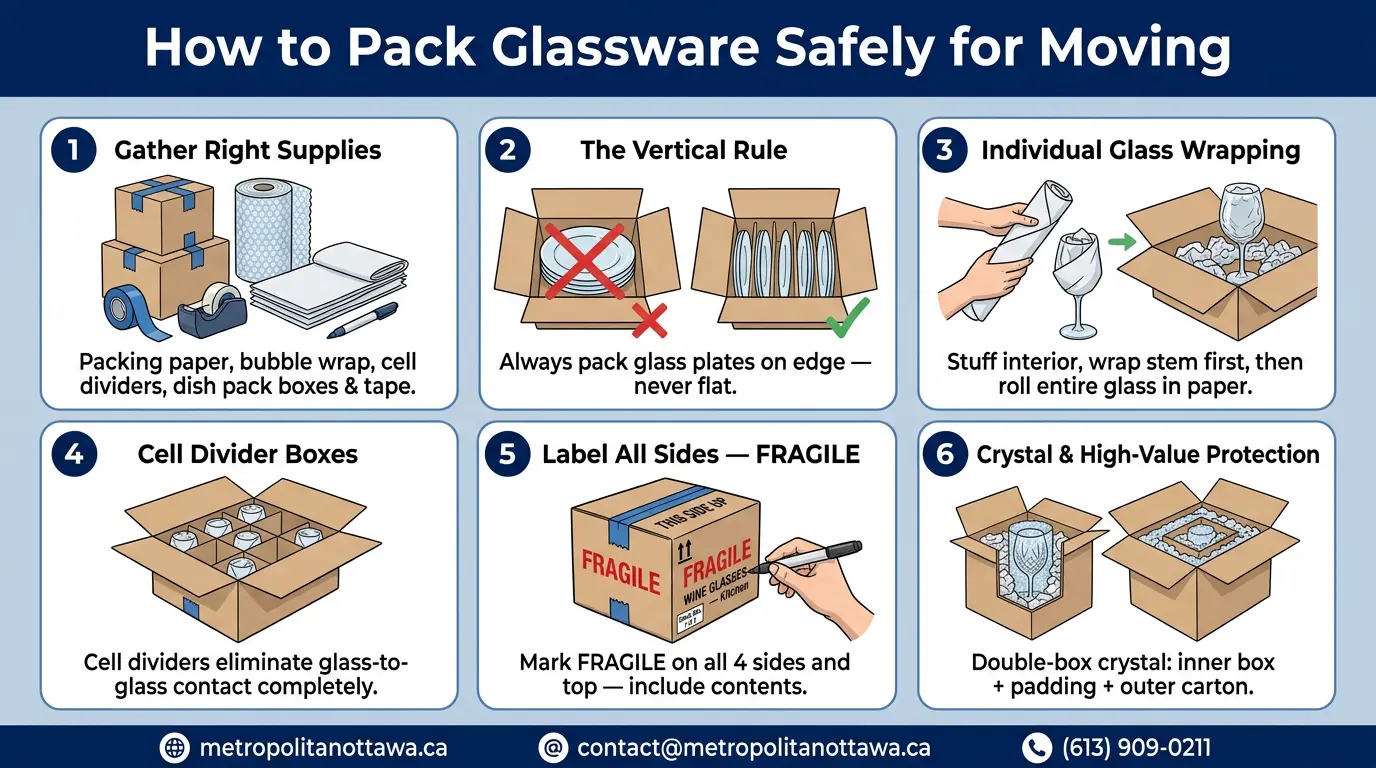
Attempting to pack glassware with improvised or inadequate materials is one of the most common and costly mistakes made by first-time movers. Having the correct supplies assembled before packing begins eliminates improvisation and sets the standard for every box you pack.
The essential materials for glassware packing are:
- Unprinted packing paper — ink-free, flexible, and inexpensive; the foundation of every wrapped glass
- Bubble wrap — secondary protection layer for crystal, antique glass, and items of significant value
- Cell divider kits — pre-cut cardboard inserts that create individual padded compartments inside a standard box
- Dish pack boxes or double-walled cartons — thicker corrugated walls that absorb impact better than standard single-wall boxes
- Packing tape — applied to all seams in an H-pattern for maximum structural integrity
- Markers — for clear FRAGILE and THIS SIDE UP labeling on all box faces
- Foam pouches — optional but useful for small decorative glass items and ornaments
Never use newspaper as a substitute for packing paper. The ink transfers permanently onto glass surfaces and is particularly damaging to crystal, etched glass, and painted decorative pieces. The cost difference between newspaper and proper packing paper is negligible — the difference in outcome is not.
Understanding Cell Divider Boxes and Why They Are the Single Best Investment for Glassware
Cell divider boxes — also sold as glass pack kits or cell kit boxes — are the most effective glassware packing system available to residential movers. A cell kit consists of a standard moving box combined with a pre-scored cardboard grid insert that subdivides the interior into individual cells, each sized to hold one glass without touching its neighbors.
The critical advantage of cell dividers is the elimination of glass-to-glass contact. In a standard box with wrapped glasses placed side by side, even careful wrapping cannot guarantee that vibration over a long drive will not gradually compress the paper between them until the surfaces meet. Cell dividers create a rigid physical barrier between every glass, making contact structurally impossible regardless of road conditions.
Cell kits are available in configurations suited to different glass types:
- 1.5-inch cells — for shot glasses, small juice glasses, and decorative glass votives
- 3-inch cells — the standard size for everyday drinking glasses and tumblers
- 4-inch cells — for wide-body wine glasses, large water goblets, and oversized tumblers
- 6-inch cells — for large glass vases, oversized stemware, and decorative glass centerpieces
For glasses that do not fit neatly into any available cell size, the correct approach is to use the next size up and fill the additional space with crumpled packing paper — snug but not compressed.
Step-by-Step Glassware Wrapping Technique for Every Glass Type
Everyday Drinking Glasses and Tumblers
Place two to three sheets of packing paper flat on a clean, padded surface. Before wrapping the exterior, stuff the interior of the glass with a tight ball of crumpled packing paper — this prevents the glass from collapsing inward under lateral pressure and adds structural support from inside. Place the glass near one corner of the paper sheets at a 45-degree angle, then roll it diagonally across the paper, folding in the excess from the sides as you go. When fully rolled, tuck the final flap under the glass body and secure with a small piece of tape.
Wine Glasses and Stemware
Wine glasses and stemmed glasses require special attention to the stem — the narrowest and most structurally vulnerable point of the entire piece. Begin by wrapping the stem separately: place the stem along the edge of a folded strip of packing paper and roll until the stem is covered in at least three layers. Fold the paper over the base and twist gently to secure. Then proceed to wrap the bowl using the standard diagonal roll technique, ensuring the base of the wrapped stem is incorporated into the body wrap. For valuable wine glasses, apply a single layer of bubble wrap over the completed paper wrap, securing at the base with tape without compressing the bubbles. Place finished glasses upright in cell divider compartments — never inverted and never on their sides.
Crystal and Fine Stemware
Crystal requires the same approach as wine glasses, with one addition: a complete outer layer of bubble wrap applied bubbles-inward over the packing paper wrap. Crystal is denser than standard glass but also more brittle at the rim and stem. For any piece worth more than a few hundred dollars, the double wrapping method — paper first, bubble wrap second — is the non-negotiable standard. Crystal pieces being moved long distance to cities like Vancouver or Calgary where transit time extends to multiple days should additionally be placed in their own inner box before being loaded into a larger outer carton — the double boxing principle applied to the most fragile category in your home.
Glass Plates and Bowls
Glass plates and flat glass bowls follow the same rule that applies to all flat breakables: always pack on edge, never flat. A glass plate packed flat on the bottom of a box with other items stacked above it is absorbing compressive weight across its entire face — a force it is not designed to withstand. The same plate packed vertically on its edge distributes any downward force along the rim, which is the structurally strongest part of the piece.
Wrap each glass plate individually in two to three sheets of packing paper, then stand the wrapped plates on edge in a dish pack box, separated from each other by folded paper padding. Fill all remaining gaps with crumpled paper until the box contents cannot shift in any direction when the box is gently shaken.
Glass Ornaments and Decorative Glass Items
Decorative glass ornaments — whether holiday pieces, art glass collectibles, or decorative figurines — represent some of the most difficult items to pack safely due to their irregular shapes, thin walls, and protrusions. Each piece should be individually wrapped in at least three sheets of packing paper, with particular attention to any narrow necks, spouts, handles, or decorative extensions that are prone to snapping. After paper wrapping, apply bubble wrap as a complete outer layer for any piece with protrusions. Pack ornaments in small boxes with generous layers of packing peanuts or crumpled paper on all sides — the box should feel solid and immovable when sealed, with absolutely no audible shifting when shaken.
Glassware Packing by Category: A Quick Reference Guide
| Glassware Type | Primary Wrap | Secondary Protection | Box Type | Orientation in Box |
|---|---|---|---|---|
| Everyday drinking glasses | 3 sheets packing paper | Interior paper stuffing | Cell divider box (3-inch) | Upright |
| Wine glasses and stemware | Paper roll + stem wrap | Single bubble wrap layer | Cell divider box (4-inch) | Upright, never inverted |
| Crystal stemware | Paper roll + stem wrap | Full bubble wrap layer + double box | Cell divider + outer carton | Upright in cell |
| Glass plates and bowls | 2–3 sheets packing paper | Folded paper dividers between each | Dish pack box | Vertical on edge |
| Glass ornaments | 3 sheets packing paper | Full bubble wrap outer layer | Small box with peanut fill | Centered, surrounded by cushion |
| Glass vases | Interior stuffed + exterior paper | Bubble wrap on exterior | Cell divider (6-inch) or individual box | Upright |
| Glass bakeware | 2–3 sheets packing paper | Foam padding sheets between pieces | Dish pack box | Vertical on edge |
Box Loading Order and Weight Distribution for Glassware Boxes
How you load a glassware box is just as important as how you wrap each individual piece. The loading sequence follows a straightforward logic: heavier glass items always go on the bottom layer, lighter and more delicate pieces on top. This prevents the weight of denser items from pressing down on thin-walled glasses and stemware that cannot support the load.
The correct loading sequence for a mixed glassware box is:
- Bottom layer: Heavy tumblers, glass plates on edge, wide-body glasses with the widest base
- Middle layer: Standard wine glasses in cells, medium-weight decorative glass items
- Top layer: Lightweight stemware, delicate ornaments, thin-walled flutes and champagne glasses
Place a generous layer of crumpled packing paper on the box floor before the first item goes in — at least two to three inches of cushioning between the glass and the cardboard base. Add a similar layer between each tier of glasses when filling a box with multiple layers. The top of the box should be filled to the brim with packing paper before sealing — a box with a sunken top layer that compresses when the lid is pressed is a box with insufficient fill.
Labeling Glassware Boxes So Nothing Gets Mishandled
Correct labeling is the last line of defense between a perfectly packed box and a mishandled one. A box labeled only on one face is invisible to a handler approaching from any other direction. Every glassware box should be labeled with FRAGILE and THIS SIDE UP on all four vertical sides and across the top — not just the side facing outward during loading.
Additional labeling best practices for glassware boxes:
- Mark the room destination clearly on two sides for efficient placement during unloading
- Note the specific contents — WINE GLASSES or CRYSTAL — so handlers know the sensitivity level without opening the box
- Write DO NOT STACK on boxes containing stemware or crystal where the top layer cannot support additional weight
- Use a thick permanent marker with high-contrast ink — adhesive fragile stickers alone are prone to peeling during transit
For families managing a residential move with multiple boxes of glassware, a sequential numbering system — GLASS BOX 1 OF 4, GLASS BOX 2 OF 4 — helps ensure all boxes are accounted for during unloading and nothing is overlooked during unpacking.
Glassware Packing Common Mistakes and How to Avoid Them
| Common Mistake | Why It Causes Breakage | The Correct Approach |
|---|---|---|
| Packing glasses flat on their sides | Concentrates stress on rim and bowl under weight | Always pack upright or vertical — never horizontal |
| Using newspaper instead of packing paper | Ink transfers permanently, especially on crystal | Use unprinted packing paper exclusively |
| Skipping interior stuffing on hollow glasses | Hollow interior collapses inward under lateral pressure | Always stuff glass interiors before exterior wrapping |
| Leaving void space in boxes | Items shift and collide with every road bump | Fill every gap until box contents are fully immobile |
| Stacking glasses directly without cell dividers | Vibration gradually compresses wrap until glass touches glass | Use cell divider inserts for all stemware and glasses |
| Overpacking boxes with glassware | Excessive weight increases risk of box failure and floor impact | Keep glassware boxes under 35–40 lbs maximum |
| Labeling only one side of the box | Handlers approach from unlabeled sides and stack incorrectly | Label FRAGILE and THIS SIDE UP on all four sides and top |
Moving Glassware Long Distance: Additional Precautions
A local move across Ottawa is relatively forgiving — transit time is short and the number of road variables is limited. A long-distance move to Montreal, Halifax, Edmonton, or Saskatoon introduces extended transit times, multiple handling points, and a wider range of road and temperature conditions that put additional stress on every packed box.
For long-distance glassware moves, the following additional precautions are strongly recommended:
- Apply the double boxing method to all crystal and high-value stemware without exception
- Use foam padding sheets as an additional buffer layer between wrapped glasses and box walls
- Add a layer of plastic stretch wrap around the exterior of sealed glassware boxes to prevent moisture ingress during transit through weather changes
- Photograph all glassware before packing and retain images alongside your moving cost documentation for insurance reference
- Discuss declared value coverage with your moving company before moving day — standard released value coverage is based on weight and is wholly inadequate for crystal and antique glass collections
If you prefer professional handling for your most valuable glassware, Metropolitan Movers Ottawa’s packing and unpacking service uses the same materials and techniques described throughout this guide, applied by experienced hands who pack glassware to professional standards on every job.
Frequently Asked Questions
What is the best way to pack wine glasses for moving?
Wrap the stem separately first using a strip of packing paper rolled tightly around it, then wrap the bowl using the diagonal roll technique with two to three sheets of unprinted packing paper. Apply a single layer of bubble wrap over the completed paper wrap and place the glass upright in a cell divider compartment sized to fit the bowl. Never invert wine glasses or pack them on their sides.
Do I really need cell divider boxes for glasses?
Yes, for any move beyond a short local carry. Cell dividers create rigid physical barriers between individual glasses that prevent glass-to-glass contact regardless of road vibration or shifting. For stemware and crystal in particular, cell dividers are the single most effective investment you can make in preventing breakage.
How do I pack glass plates and bowls without breaking them?
Always pack glass plates vertically on edge — never flat. Wrap each plate individually in two to three sheets of packing paper and stand them upright in a dish pack box, separated by folded paper dividers between each plate. Fill all void space with crumpled paper until nothing can move when the sealed box is gently shaken.
Can I use regular moving boxes for glassware?
Standard single-wall moving boxes are not ideal for glassware. Dish pack boxes — double-walled cartons with thicker corrugated construction — provide significantly better impact absorption and are worth the modest additional cost for glassware boxes. Combine dish pack boxes with cell divider inserts for the most complete protection available in standard residential packing.
Does Metropolitan Movers Ottawa provide professional packing for glassware and crystal?
Yes. Metropolitan Movers Ottawa provides full professional packing and unpacking services for all household moves, including careful handling of glassware, crystal, and high-value decorative glass items. The team brings over 15 years of experience and uses professional-grade materials suited to every category of fragile glass in your home.
Everything You Pack Today Determines What Survives Tomorrow — Pack Your Glassware Right the First Time and Move with Complete Confidence
Glassware breakage during a move is almost always the result of one avoidable decision — the wrong box, the skipped layer of wrap, the void space left unfilled, the label placed on only one side of the carton. Every technique in this guide exists to close those gaps before they cost you something irreplaceable. Whether you are packing a dozen everyday glasses or a full set of crystal stemware that has been in your family for decades, the investment of time and correct materials today is the only thing standing between those pieces and the floor of a moving truck. When you are ready to move, Metropolitan Movers Ottawa is here to handle every detail — from professional packing support and local moving services to fully managed long-distance relocations. Reach out today and move forward knowing everything you value is in the right hands.