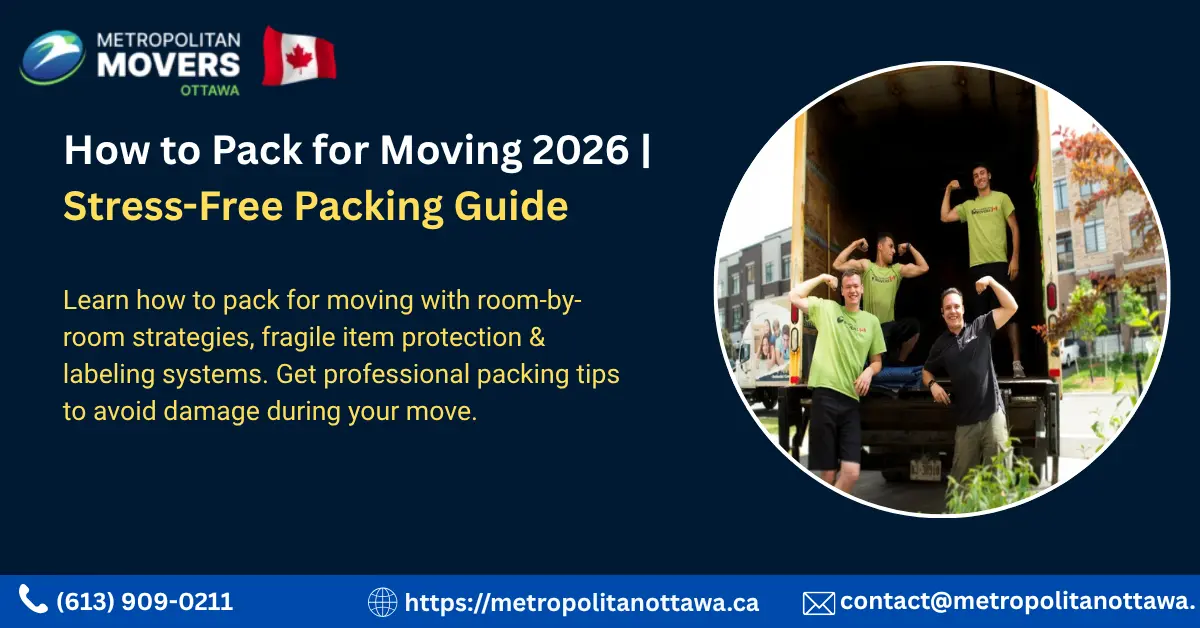
You have boxes everywhere but no idea where to start. The closing date is approaching. Everything you own needs protection, yet time is running out. Learning how to pack for moving efficiently saves you from opening boxes full of broken memories at your new home.
Metropolitan Ottawa helps thousands of families navigate this exact challenge every year. We have watched people pack china in newspaper (it leaves permanent marks), stack plates flat (they shatter), and forget to label boxes entirely (chaos guaranteed). This guide prevents those mistakes through systematic strategies that actually work. For complete details, our complete packing guide for moving covers every scenario.
Start With the Right Supplies or Pay Later
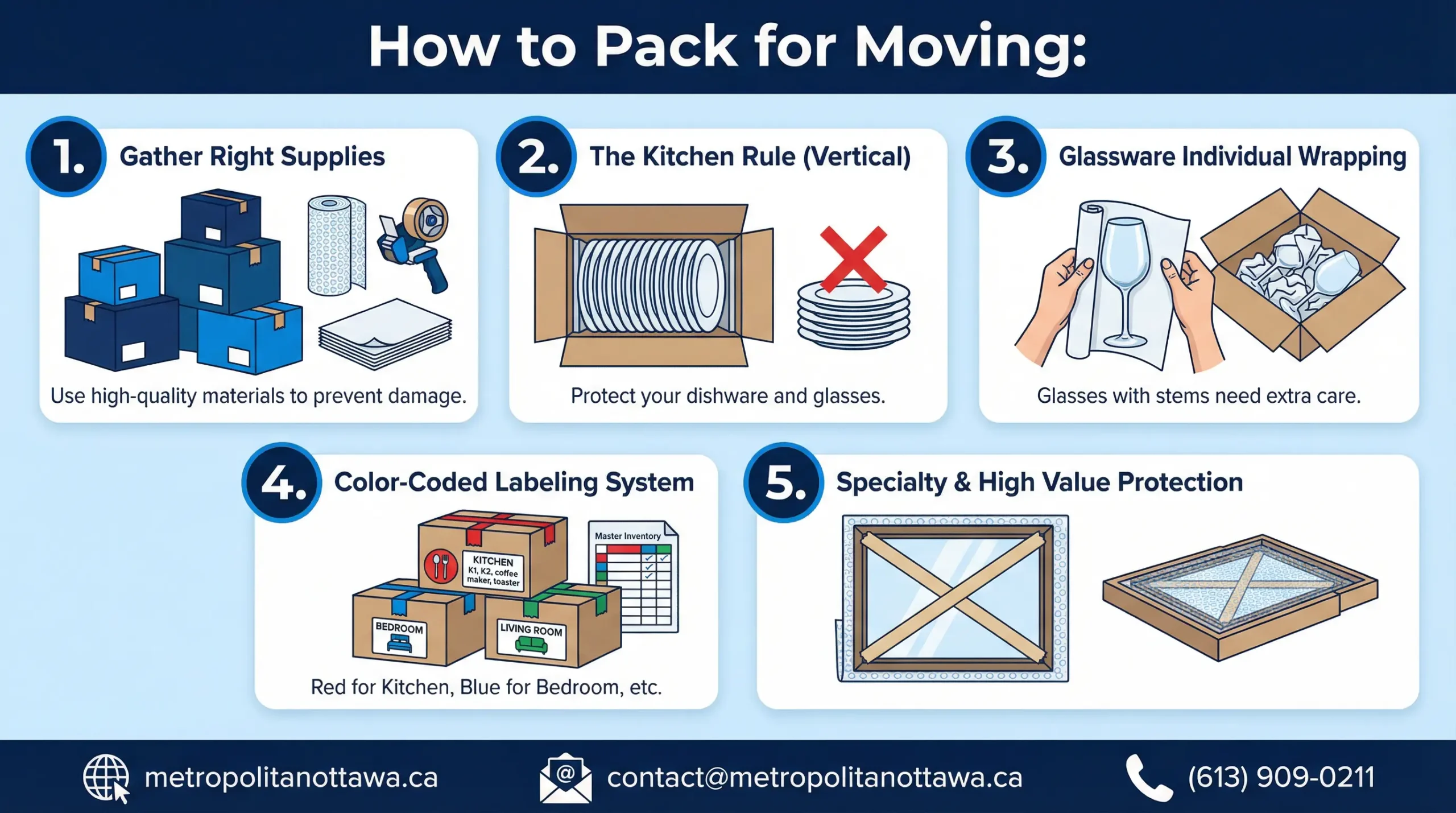
Understanding how to pack for moving begins with having proper materials. A three-bedroom home typically needs 30-40 medium boxes, 15-20 large boxes, 4-6 rolls of bubble wrap, 10 pounds of packing paper, and 8-10 rolls of heavy-duty tape. Total cost runs $365-$490, but skimping guarantees damage.
Professional packing and unpacking services include materials and often cost less than DIY when you factor in time and breakage risk.
The Kitchen: Where Most Damage Happens
Kitchens break hearts and budgets when packed wrong. Start three weeks before moving day with rarely-used items like seasonal dishes and specialty appliances. Wrap plates vertically like records in dish pack boxes — never stack them flat. Each glass needs individual wrapping with paper stuffed inside first, then wrapped outside. Wine glasses require extra attention on stems.
Heavy items like cast iron go in small boxes to prevent bottom blow-outs. Sharp knives need cardboard sheaths taped closed. Leave one box of essentials for moving week meals — you will need plates and cups until the end.
Protecting Fragile Items Without Going Overboard
The biggest mistake people make when learning how to pack for moving is over-protecting some items while ignoring others. Flat-screen TVs need their original boxes or special TV moving kits — never lay them flat. Mirrors and artwork require masking tape in an X pattern across glass before wrapping, then standing vertical in mirror boxes with corner protectors.
China sets need paper between each piece, then vertical stacking. Skip newspaper entirely as ink transfers permanently. For items valued over $1,000, our piano moving service team handles specialty packing with custom crating.
The Labeling System That Actually Works
Write room names on three sides of each box. Create a master list linking box numbers to contents — invaluable when searching for specific items later. Our how to unpack after moving guide includes printable inventory sheets.
Smart Packing Tricks That Save Time and Space
Professional movers pack differently than amateurs. Use suitcases for heavy books — wheels beat carrying. Wrap dresser drawers in plastic wrap to keep contents inside. Thread garbage bags over hanging clothes from bottom up for instant garment bags. Stuff socks inside shoes to maintain shape while maximizing space.
Take photos before disconnecting electronics or disassembling furniture — these references save hours during reassembly. Vacuum seal bags compress bedding and winter clothes by 75%, crucial for long-distance moves where space costs money.
When Professional Packing Makes More Sense
Learning how to pack for moving helps even if you hire professionals — you understand the process better. Consider professional services when moving valuable collections, facing tight deadlines, handling last-minute relocations, or managing senior moves requiring extra care.
Metropolitan Ottawa offers full packing where crews handle everything, partial packing for fragiles only, or supply delivery with guidance. Professional packers complete a three-bedroom home in one day versus the two weeks most people need. Check our moving cost guide for Canada for pricing breakdowns.
Your Successful Pack Starts Today
How to pack for moving successfully requires starting early with proper supplies and following systematic room-by-room strategies. Whether preparing for a local Ottawa move or relocating across Canada, these techniques protect your belongings while maintaining sanity.
The difference between a smooth move and a disaster often comes down to packing quality. Use the strategies above, invest in decent supplies, and don’t hesitate to call professionals for valuable or complicated items. Your first week after moving should focus on settling in, not dealing with damaged belongings.