how to pack artwork for a move requires more care and precision than almost any other item in your home. A painting or framed print is not just a decorative object; it can be a valuable investment and a source of immense personal meaning. The process to pack artwork for moving should be guided by professional, gallery-packing-standards to prevent scratches, tears, and breakage. This guide provides detailed artwork-protection-tips for everything from simple prints to valuable canvases. For irreplaceable pieces, the expert team at metropolitan movers Ottawa offers specialized services to ensure their safety.
The Foundation: Essential Materials for Wrapping Paintings Safely
Using the right materials is the most critical step. Standard newspaper and bubble wrap can cause irreversible damage.
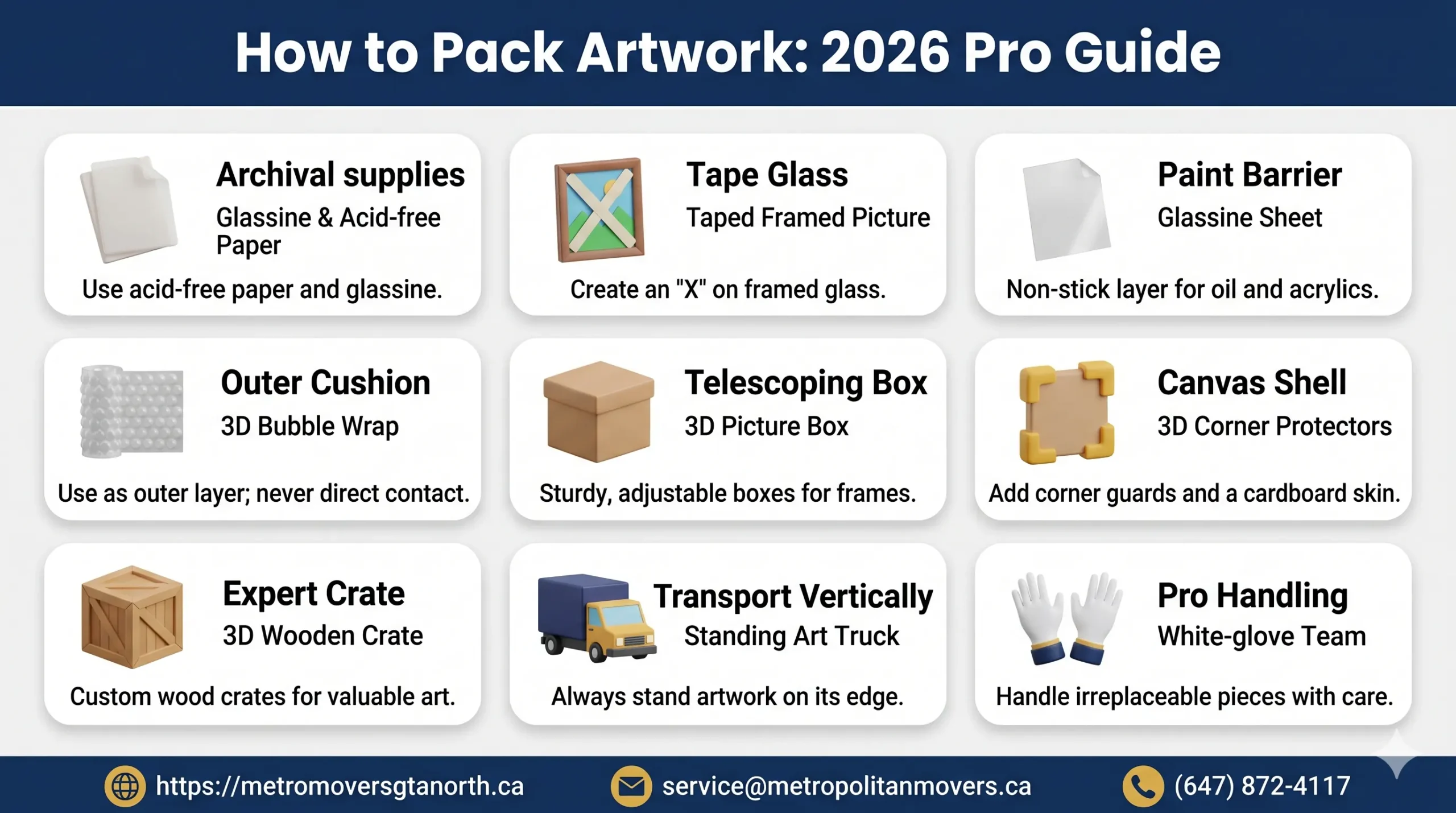
- Acid-Free Packing Paper or Glassine: This is non-negotiable. Regular paper contains acids that can leach into your artwork over time, causing yellowing. Acid-free-packing-paper is archival quality. For unframed oil or acrylic paintings, use glassine paper for the first layer, as it will not stick to the paint surface.
- Picture Moving Boxes: These are heavy-duty, often telescoping cardboard boxes designed specifically for framed-art-packing. They provide superior structural protection compared to regular boxes.
- Painter’s Tape: Use this to create an “X” across the glass of framed pieces. This won’t stop the glass from breaking, but it will hold the shards in place, preventing them from slashing the artwork itself.
- Cardboard Corner Protectors: These are essential for protecting the delicate corners of frames and stretched canvases.
- Bubble Wrap: Use this as an outer layer for cushioning, but never let it come in direct contact with a painting’s surface, especially on unframed works.
Step-by-Step Guide for Framed Art Packing
For most framed prints, photos, and posters under glass, this method offers excellent protection.
- Prepare the Glass: If the piece is behind glass, apply painter’s tape in a large “X” pattern from corner to corner.
- Protect the Surface: Lay a sheet of acid-free-packing-paper or glassine over the entire front surface.
- Wrap and Secure: Wrap the entire piece in several layers of bubble wrap, paying extra attention to the corners. Secure it with packing tape.
- Box It Up: Slide the wrapped frame into a properly sized picture-moving-box. The fit should be snug. If there are any gaps, fill them with crumpled packing paper to prevent any movement. For a complete overview of packing techniques, you can review this complete packing guide for moving.
- Label Clearly: Seal the box and label it “FRAGILE – ARTWORK” with arrows indicating which way is up.
This systematic approach is the best way to pack artwork for moving.
Special Care for Securing Canvas Prints and Unframed Paintings
Securing-canvas-prints and original paintings requires a more delicate touch, as there is no glass for protection.
- Never Let Bubble Wrap Touch the Surface: The plastic can stick to the varnish or paint and leave impressions. The first layer must always be glassine or acid-free-packing-paper.
- Protect the Corners: Attach cardboard corner protectors before wrapping.
- Create a “Skin”: For added protection, you can create a “skin” by cutting a piece of cardboard slightly larger than the canvas and placing it over the front (on top of the protective paper layer) before you bubble wrap it. This provides a hard shell against punctures.
The process to pack artwork for moving when it’s a canvas is about preventing pressure and punctures. The team at metropolitan movers Ottawa is trained in these specific techniques.
Knowing When to Call for Professional Art Crating Services
A DIY approach is not always sufficient. For moving-expensive-art, professional art-crating-services are the only way to guarantee protection. Consider a custom crate if your artwork meets any of these criteria:
- High Monetary Value: If the piece is a significant investment, don’t risk it.
- Sentimental or Irreplaceable Value: Some things cannot be replaced at any cost.
- Large or Unusual Size: Oversized pieces require custom-built crates for structural support.
- International or Long-Distance Moves: The longer the journey, the higher the risk.
A custom crate is a wooden box built to the exact dimensions of your artwork with internal bracing and museum-grade padding. This is the gold standard for artwork-protection-tips. For such high-value items, you should rely on a company with expertise in handling specialized cargo, which is a core component of a professional freight moving service.
Transport and Handling: The Final Step
How you pack artwork for moving is only half the battle. Transport is just as critical.
- Always Transport Vertically: Never lay artwork flat. Storing it on its edge distributes pressure safely.
- Secure It: In the moving truck, slide pieces between a mattress and box spring or brace them against the truck wall with other flat items. Ensure they cannot fall over.
- Climate Matters: Avoid leaving art in places with extreme temperature or humidity changes.
For your entire household move, including your precious art, the professionals at metropolitan movers Ottawa apply these careful handling techniques to all your belongings. Their comprehensive house moving service ensures that every item, from your sofa to your most cherished painting, is treated with the respect it deserves.